
Applications
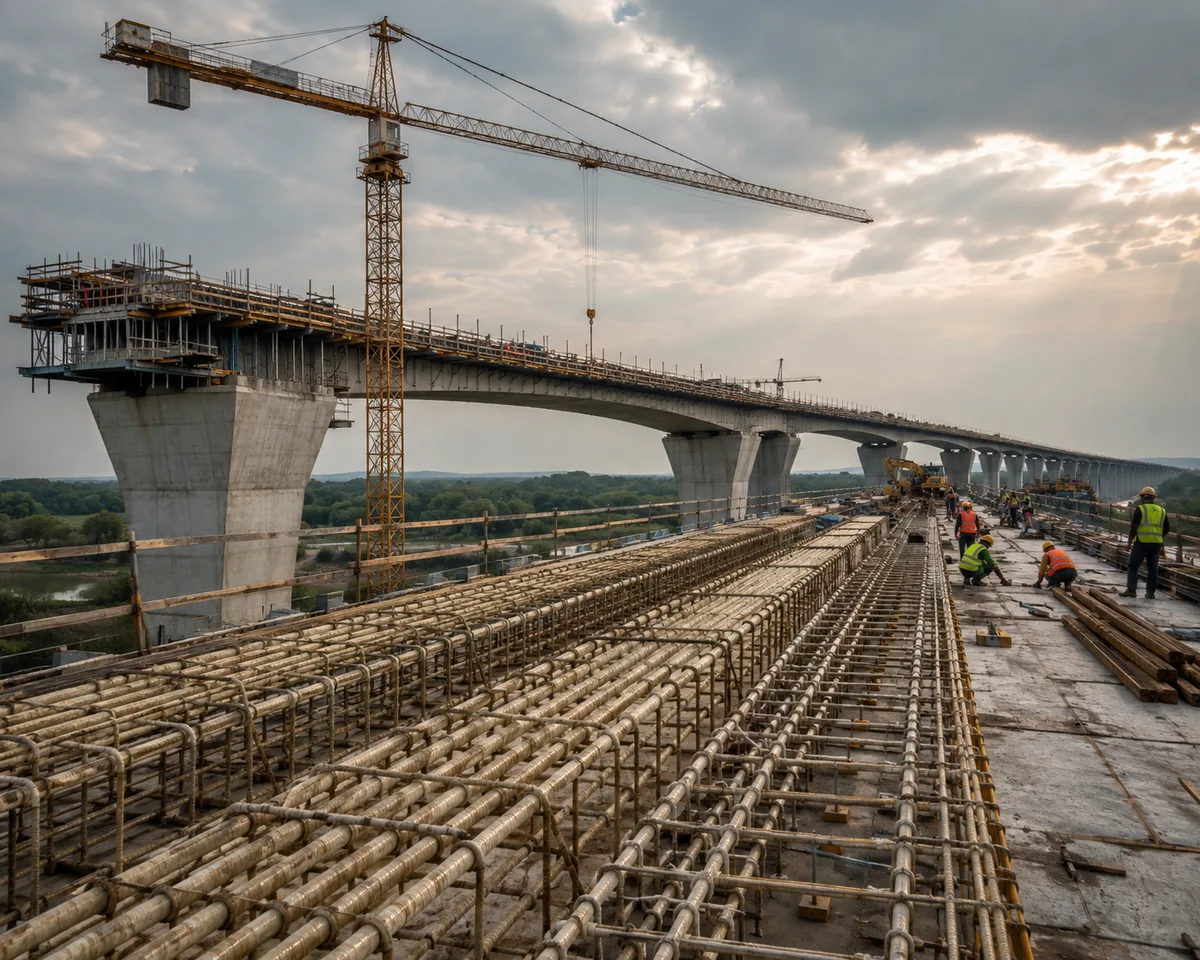
Infrastructure reinforcement
Bridges, metros, highways and tunnels are exposed to de-icing salts, moisture and heavy loading. GFRP reinforcement resists the corrosion that shortens the life of steel-reinforced infrastructure.
Why GFRP here
Built for this environment
- Decades of added life — Corrosion-free bars keep decks and piers sound far longer.
- Non-magnetic — No interference for rail signalling and toll/sensor systems.
- Lower lifecycle cost — Fewer repairs and closures over the life of the asset.
Typical uses
Quote for your infrastructure project
Diameter + quantity is all we need to quote.
Questions
Infrastructure — answered
01 Why use GFRP in bridges and highways?
De-icing salts and moisture corrode steel; GFRP does not corrode, which extends the life of decks and piers and cuts repair and closure costs over the asset's life.
02 Does GFRP interfere with rail signalling?
No. GFRP is non-magnetic, so it avoids the electromagnetic interference steel can cause near rail, tolling and sensor systems.
Question not covered here?
Ask it on WhatsApp and we will answer it directly.
Ask on WhatsApp
Other sectors